
Kitchen Worktop Edge Profiles: A UK Guide to Square, Eased, Bullnose and Mitred Edges
The edge profile changes how a worktop looks, feels and wears. Compare square, eased, pencil, bullnose, bevelled and mitred edges for quartz, granite, solid surface and laminate.
Most kitchens fail at the join, the sink cut-out or the edge — so that is where this article spends its time. This note is written for Kitchen Worktops Direct readers who want a practical view of colour, thickness and fitting before they lock a specification.
The edge profile is one of the smallest decisions in a worktop project and one of the most noticeable. It changes how thick the worktop looks, how comfortable it is to lean against, how well it resists chips and how easy it is to clean. Kitchen Worktops Direct explains the common UK edge profiles and which materials suit each one.
Contents
1 Square and eased edges
2 Pencil round and half bullnose
3 Full bullnose
4 Bevelled edges
5 Mitred apron edges
6 Which materials suit which edges
7 How edge profile affects perceived thickness
8 Edges, cleaning and everyday wear
9 Matching edges with sinks, hobs and upstands
10 Choosing an edge for different kitchen styles
11 Samples of edge profiles
12 Frequently asked questions
Square and eased edges
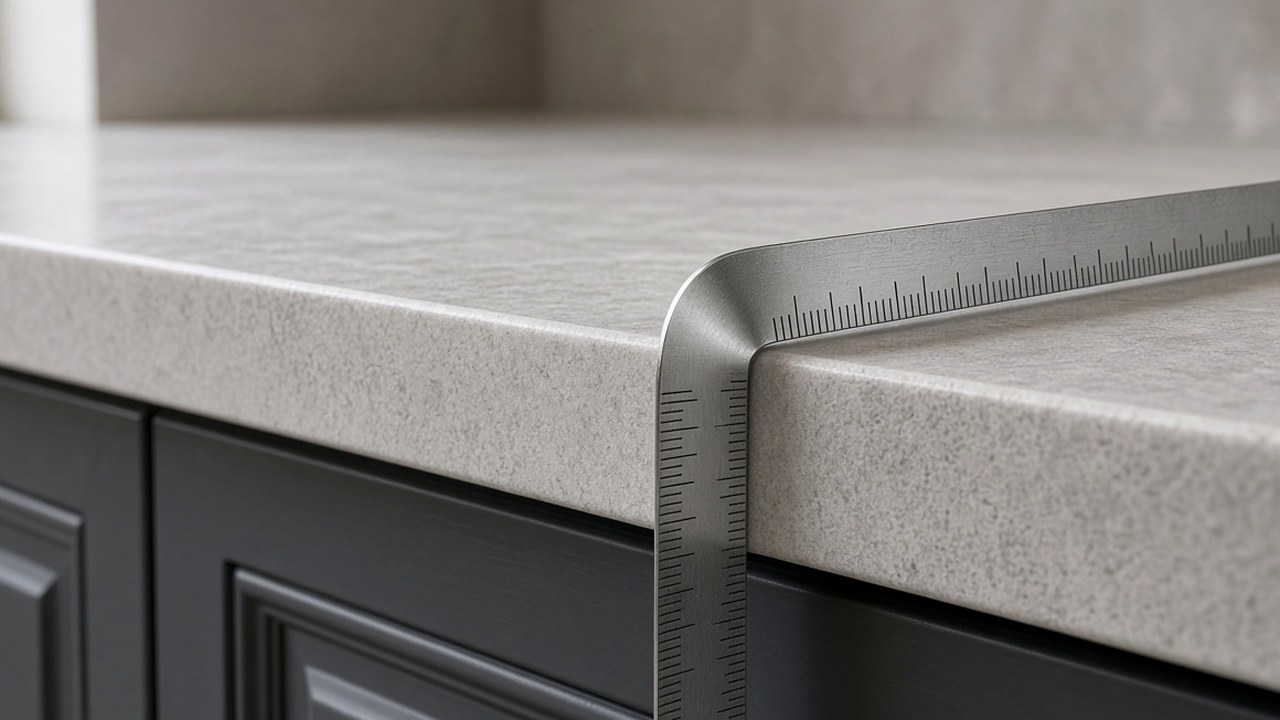
A square edge has a flat front and crisp corners. In practice, most fabricators apply a small eased arris, a slight rounding of the sharp edge, to reduce chipping and make it more comfortable. An eased square edge is the most popular choice for contemporary quartz, granite and solid surface kitchens.
It looks clean and modern, suits handleless cabinets and keeps the worktop’s thickness visually precise.
- Crisp, contemporary appearance.
- Small eased arris reduces chipping.
- Suits most modern kitchens.
Pencil round and half bullnose
Here are the kitchen worktop ranges we currently supply:
A pencil round edge has a gentle radius on the top and bottom arris. A half bullnose rounds the top edge more fully, leaving the bottom square. Both soften the look and feel of the worktop and suit traditional or family kitchens.
Rounded edges are also more forgiving on knocks and kinder to hips and small heads. Our guide to the best kitchen worktops for family homes covers other family-friendly details.
Full bullnose
A full bullnose rounds both top and bottom into a continuous curve. It looks soft and traditional. It can make a thin worktop look thicker, but it is less common in modern kitchens.
Bevelled edges
A bevel cuts a flat angled face on the top edge. It catches light and gives a tailored look, particularly on granite and quartz. Bevels can be small and subtle or larger and more pronounced.
- Angled face catches the light.
- Suits classic and transitional kitchens.
- Available in different sizes.
Mitred apron edges
A mitred apron joins a vertical strip to the front edge at 45 degrees, making the worktop look much thicker than the slab. It is popular on islands and with veined quartz, where the vein appears to wrap over the edge. Mitred edges add fabrication time and are usually priced as an extra. See our guide to kitchen island worktops and waterfall edges.
Which materials suit which edges
Quartz, granite and porcelain can be shaped into most profiles, though very thin porcelain has more limited options. Solid surface such as Corian can be shaped into almost any profile, including built-up edges. Laminate edges are usually square or post-formed. Wood can be profiled on site.
Edge work can affect the price. Our article on hidden worktop costs explains how edges are quoted.
How edge profile affects perceived thickness
Edge detail changes how thick a worktop appears from across the room. A crisp square edge shows the true thickness clearly, so a 20mm or 30mm slab looks exactly that. A heavily rounded bullnose makes the edge appear softer and slightly slimmer. A mitred apron can make a thin slab look two or three times thicker, which is why it is popular for statement islands.
If you want a slim, minimal look, choose a square or lightly eased edge on a thinner material. If you want a chunky, substantial look without the weight of a very thick slab, ask about mitred or built-up edges.
- Square edges show the real thickness.
- Bullnose edges look softer and slimmer.
- Mitred aprons make slabs look thicker.
Edges, cleaning and everyday wear
The edge takes more knocks than any other part of the worktop: pans, chairs, vacuum cleaners and bags all catch it. Sharp arrises are the most vulnerable to chipping, especially on quartz and granite. A small eased or pencil-round arris spreads the impact and makes chips less likely.
Cleaning matters too. Square and eased edges are easy to wipe. Deep ogee or decorative profiles have grooves that collect crumbs and grease. Drip grooves on the underside of an edge can help stop liquids running onto cabinet doors, but they are not always offered, so ask.
Matching edges with sinks, hobs and upstands
Edge profile should work with the rest of the worktop detailing. An undermount sink cut-out is usually polished with a small radius; if the outer edge is square, a matching square-ish cut-out edge looks consistent. Upstands usually have a square top edge or a small pencil round, which looks tidy with most profiles. See our guide to undermount vs inset sinks for more on cut-out edges.
- Keep cut-out edges consistent with the outer edge.
- Choose a matching upstand top edge.
- Ask about drip grooves.
Choosing an edge for different kitchen styles
Contemporary and handleless kitchens usually suit square or eased edges. Shaker and traditional kitchens can carry pencil round, half bullnose or small bevel edges. Industrial kitchens suit thicker square edges. Family kitchens often benefit from softer rounded edges on islands, where children run past. Our guide to worktop joints explains how edges and joints are finished together at corners.
Samples of edge profiles
Most fabricators can show edge samples or photos. Hold them at worktop height and run your hand along them, as comfort matters where you lean or sit. Confirm the chosen profile in writing before templating.
Frequently asked questions
Which worktop edge profile is most popular in the UK?
An eased square edge is the most common choice for modern quartz, granite and solid surface worktops.
Do rounded edges chip less?
Rounded and eased edges are generally more resistant to chipping than sharp square edges.
Does a mitred edge cost more?
Usually, because it involves extra cutting and joining. Ask for it to be itemised on your quote.
Which edge profile is easiest to clean?
Square and eased edges are easiest to wipe. Deep decorative profiles collect crumbs and grease.
Can an edge make a thin worktop look thicker?
Yes. Mitred apron and built-up edges create the appearance of a thicker worktop without a heavier slab.
Which edge suits a Shaker kitchen?
Pencil round, half bullnose or a small bevel usually suit Shaker and traditional kitchens.
Can the edge profile be changed after fitting?
Only to a limited extent. Solid surface and wood can sometimes be reshaped on site, but stone and quartz edges are best finalised before fabrication.
Next step
Planning new worktops? Request a quote, order a free sample, or read the London worktops buying guide.