
Outdoor Kitchen Worktops for the British Climate
Outdoor kitchens face rain, frost and sun, so worktop choice matters. Compare porcelain, granite, stainless steel and other materials for a British garden kitchen.
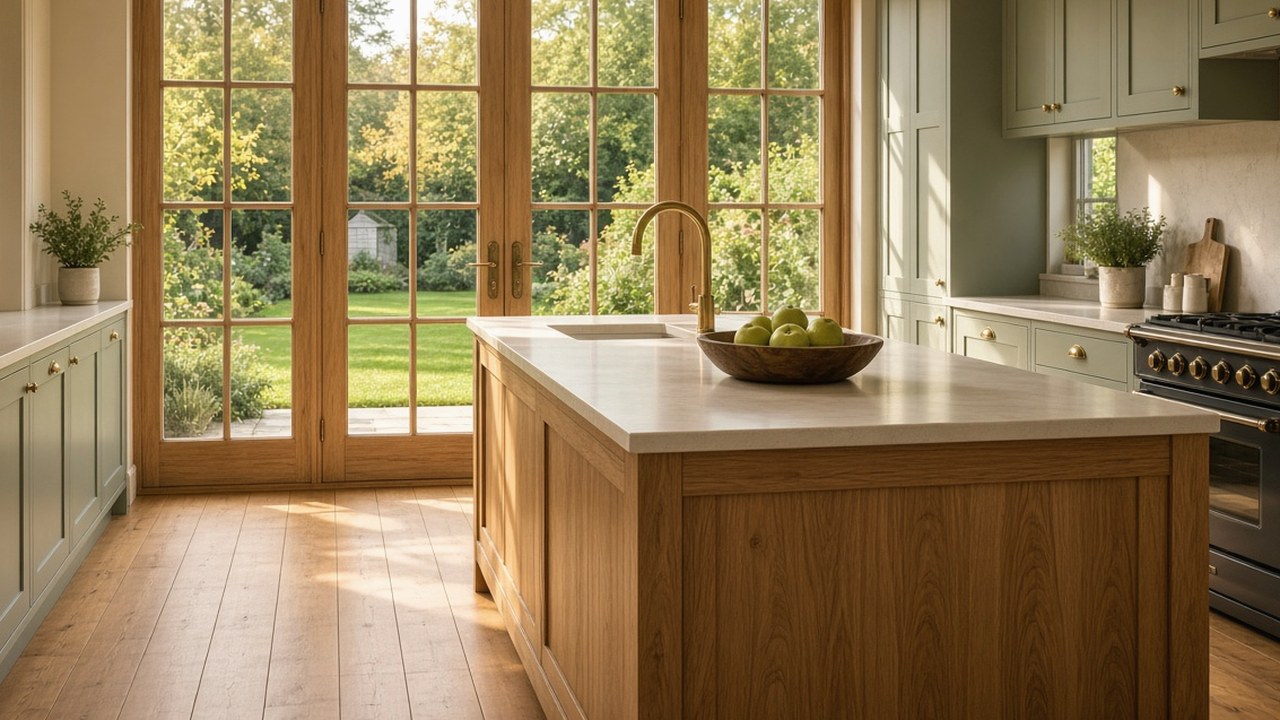
If you are choosing between a seamless run and a mitred island, the notes below are the checks we use on site. This note is written for Kitchen Worktops Direct readers who want a practical view of colour, thickness and fitting before they lock a specification.
Garden kitchens and barbecue stations have become popular in the UK. An outdoor worktop faces rain, frost, sun, leaves and bird droppings, so it needs different qualities from an indoor surface. Kitchen Worktops Direct explains which materials cope best with the British climate and what to check before ordering.
Contents
1 What an outdoor worktop must handle
2 Porcelain and sintered stone
3 Granite
4 Stainless steel
5 Materials to check carefully
6 Covering and care
7 Planning the outdoor kitchen layout
8 Bases and cabinets for outdoor use
9 Frost, water and drainage
10 Heat near barbecues and pizza ovens
11 Lighting and power
12 Care through the seasons
13 Budgeting for an outdoor kitchen
14 Outdoor worktops and planning rules
15 Seating and dining next to the worktop
16 Frequently asked questions
What an outdoor worktop must handle
An outdoor worktop should resist water absorption, frost damage, UV fading and staining. It should be easy to clean and able to cope with heat near a barbecue. Materials that are ideal indoors are not always suitable outside.
- Water and frost resistance.
- UV stability.
- Stain resistance and easy cleaning.
Porcelain and sintered stone
Here are the kitchen worktop ranges we currently supply:
Porcelain and sintered stone are often promoted for outdoor use because of their very low porosity and UV stability. Check the manufacturer’s guidance for outdoor use. Our guide to Dekton and porcelain worktops explains the material.
Granite
Granite is a natural stone that is widely used outdoors. It generally copes with weather but may need sealing depending on the stone. Our granite worktops guide explains sealing and care.
Stainless steel
Stainless steel is hygienic and heat-resistant, and suitable grades are used outdoors. It can scratch and show marks. Our stainless steel worktops guide covers grades and care.
- Heat-resistant and hygienic.
- Choose a suitable grade for outdoor use.
- Shows scratches and marks.
Materials to check carefully
Quartz and solid surface are generally designed for indoor use, and some manufacturers do not recommend them in direct sunlight outdoors. Standard laminate and untreated wood are usually unsuitable outside. Always check the manufacturer’s guidance. Our quartz worktops guide covers indoor quartz.
Covering and care
A roof or pergola extends the life of any outdoor kitchen. Cover the worktop in winter if possible, clean regularly and follow the manufacturer’s care guidance.
Planning the outdoor kitchen layout
An outdoor kitchen works best when planned like an indoor one, with zones for preparation, cooking, serving and cleaning. Place the barbecue or grill where smoke will blow away from seating and neighbours. Allow worktop space on both sides of the grill for trays and utensils. If you include a sink, plan water supply and drainage carefully, including how to drain the system before winter.
Position the kitchen close enough to the house to carry food easily, but far enough to avoid smoke entering windows and doors.
- Zone preparation, cooking and serving.
- Allow worktop space beside the grill.
- Plan water and winter drainage.
Bases and cabinets for outdoor use
Worktops outdoors need weather-resistant bases. Masonry, rendered blockwork, stainless steel cabinets and marine-grade materials are common. Standard indoor kitchen cabinets are not suitable outside. The base must be level, stable and able to support the worktop weight, particularly for heavy stone.
Frost, water and drainage
British winters bring frost. Water that soaks into porous materials can freeze and expand, causing cracks. Choose low-porosity materials, seal natural stone as recommended and ensure worktops have a slight fall or overhang so water runs off rather than pooling. Drip grooves on the underside of overhangs help protect the base.
- Choose low-porosity materials.
- Ensure water runs off.
- Consider drip grooves.
Heat near barbecues and pizza ovens
Grills and pizza ovens produce intense heat. Leave the manufacturer’s recommended clearances around built-in appliances and use heat-resistant materials close to them. Porcelain, sintered stone, granite and stainless steel generally cope well with heat, but always check appliance instructions.
Lighting and power
Outdoor lighting makes an outdoor kitchen usable in the evening. Outdoor sockets and lighting must be installed by a qualified electrician using suitable weatherproof fittings. Plan lighting above worktops so you can see what you are cooking.
Care through the seasons
Clean outdoor worktops regularly, especially after cooking, to remove grease and food that attract pests. Remove leaves and bird droppings promptly. In winter, cover the kitchen or use fitted covers. Our granite guide explains sealing, which may need doing more often outdoors.
Budgeting for an outdoor kitchen
Outdoor kitchens vary widely in cost depending on size, materials, appliances, utilities and groundwork. Worktops are one part of the budget; bases, grills, pizza ovens, sinks, lighting, power and shelter can all add significantly. Ask for itemised quotes so you can compare options and decide where to spend.
It can make sense to plan the full layout and utilities now, then add features such as a pizza oven later.
- Ask for itemised quotes.
- Plan utilities early.
- Add features in stages.
Outdoor worktops and planning rules
Most garden kitchens do not need planning permission, but larger structures, roofs and anything close to boundaries may be subject to rules. If you are adding a covered pergola or a building, check with your local council or a professional before starting work.
Seating and dining next to the worktop
Many outdoor kitchens include a bar-height counter or dining table next to the cooking area. A worktop overhang with outdoor bar stools lets guests chat with the cook. Choose outdoor furniture that is weather-resistant and store cushions indoors when not in use.
Frequently asked questions
Can I use quartz in an outdoor kitchen?
Many manufacturers do not recommend quartz in direct sunlight outdoors. Check the product guidance.
What is the best outdoor worktop material in the UK?
Porcelain, sintered stone, granite and suitable stainless steel are common choices. Check each product’s guidance.
Does an outdoor kitchen need a roof?
It is not essential, but a roof or pergola protects the worktop and extends its life.
Can indoor kitchen cabinets be used outside?
No. Use weather-resistant bases such as masonry, stainless steel or marine-grade materials.
How do I protect an outdoor worktop from frost?
Choose low-porosity materials, seal stone as recommended and ensure water runs off rather than pooling.
Who should install outdoor sockets?
A qualified electrician, using suitable weatherproof fittings.
Does an outdoor kitchen need planning permission?
Many do not, but covered structures and larger buildings may. Check with your local council.
Can I build an outdoor kitchen in stages?
Yes. Planning the full layout and utilities first makes it easier to add features later.
Can an outdoor kitchen have a breakfast bar?
Yes. A worktop overhang with weather-resistant bar stools is a popular way to include seating.
Next step
Planning new worktops? Request a quote, order a free sample, or read the London worktops buying guide.