
Undermount vs Inset Sinks: Which Suits Your Worktop?
Undermount sinks sit below the worktop for a seamless look; inset sinks drop in from above. Compare cleaning, cost, materials, drainer grooves and installation for UK kitchens.
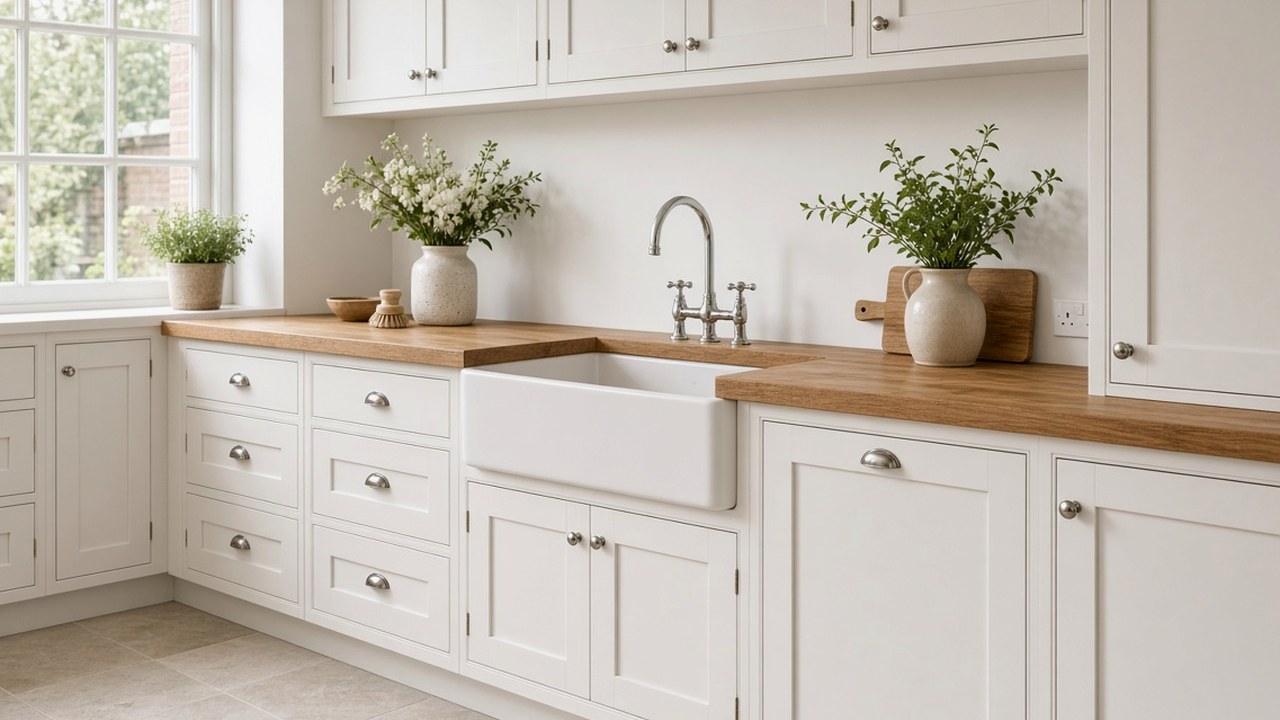
We start with how a finish behaves beside cabinets and daylight, not with a catalogue slogan. This note is written for Kitchen Worktops Direct readers who want a practical view of colour, thickness and fitting before they lock a specification.
The sink is used more than any other part of the worktop, so how it sits in the surface matters. The main choice is between an undermount sink, fixed beneath the worktop, and an inset sink, dropped into a cut-out from above. Kitchen Worktops Direct compares the two so you can choose the right one for your material and budget.
Contents
1 How an undermount sink works
2 How an inset sink works
3 Cleaning and hygiene
4 Cost and fabrication
5 Which worktop materials suit each
6 Belfast and butler sinks
7 Integrated sinks: a third option
8 Sink materials compared
9 Taps and sink position
10 Sink size and cabinet size
11 Reusing an existing sink
12 Sealing and hygiene around the sink
13 Frequently asked questions
How an undermount sink works
An undermount sink is fixed to the underside of the worktop, so the worktop’s polished cut-out edge is visible around the bowl. Crumbs and water can be wiped straight into the sink with no rim in the way. It looks sleek and is popular with quartz, granite and solid surface worktops.
Undermount sinks need a worktop material that is water-resistant at the cut edge, which is why they suit stone, quartz and solid surface better than standard laminate.
- Seamless, easy-to-wipe look.
- Needs a water-resistant material.
- Polished cut-out edge is visible.
How an inset sink works
Here are the kitchen worktop ranges we currently supply:
An inset or top-mount sink has a rim that sits on top of the worktop, supporting the sink. It is usually easier and cheaper to install and suits almost any worktop material, including laminate and wood. The rim can collect a little grime and needs occasional cleaning.
Cleaning and hygiene
Undermount sinks are generally easier to keep clean because there is no rim at worktop level. Inset sinks need the rim and sealant line wiped regularly. Our guide to cleaning quartz worktops covers everyday care around the sink.
Cost and fabrication
Undermount cut-outs require polishing of the cut edge, so they are usually priced higher than inset cut-outs. Drainer grooves cut into the worktop are another optional extra. Our article on hidden worktop costs explains how cut-outs appear on a quote.
- Undermount cut-outs are usually priced higher.
- Drainer grooves are an optional extra.
- Ask for each item to be listed.
Which worktop materials suit each
Quartz, granite, porcelain and solid surface suit undermount sinks. Solid surface can also have an integrated sink with no visible join. Laminate usually takes inset sinks, although compact laminate can accept undermount sinks. Wood can take either with careful sealing. See our laminate worktops guide and compact laminate guide.
Belfast and butler sinks
Ceramic butler and Belfast sinks often sit beneath the worktop or project in front of the cabinet. The worktop is cut around the sink, and the sink must be on site at templating so the cut-out can be measured accurately.
Integrated sinks: a third option
With solid surface worktops such as Corian, an integrated sink can be made from the same material and bonded to the worktop so there is no visible join. It looks seamless and is very easy to clean, because there is no rim or sealant line at all. Integrated sinks are usually available in a range of bowl sizes and can include matching drainer grooves.
Heat resistance is lower than a steel or ceramic sink, so avoid pouring boiling water directly into a solid surface bowl without running the cold tap as well, and follow the manufacturer’s guidance. See our article on whether Corian worktops are worth it.
- No visible join between sink and worktop.
- Very easy to clean.
- Follow guidance on boiling water.
Sink materials compared
Stainless steel is the most common kitchen sink material: durable, hygienic and heat-resistant, though it can scratch and show water marks. Ceramic, including Belfast and butler sinks, is heavy and hard-wearing with a classic look, but dropped glasses are more likely to break. Composite granite sinks come in many colours and resist scratches, but some colours show limescale. Each can be undermounted or inset, depending on the model.
Taps and sink position
Tap position depends on the sink type. With undermount sinks, taps are usually mounted directly through the worktop, so the tap hole is cut during fabrication. With inset sinks, taps may be mounted on the sink deck or through the worktop. Choose the tap before templating so the hole can be positioned correctly, and check that the tap spout reaches the centre of the bowl.
- Undermount sinks need a worktop tap hole.
- Choose the tap before templating.
- Check spout reach.
Sink size and cabinet size
The sink must fit the base cabinet beneath it. Undermount sinks need space for the bowl, the clips and the waste. Large single bowls and one-and-a-half bowls need wider cabinets. Check sink and cabinet sizes with your kitchen designer before ordering. Our timeline guide explains when the sink needs to be on site.
Reusing an existing sink
When replacing worktops only, you can often reuse an existing inset sink, provided it is in good condition and fits the new cut-out. Switching to an undermount sink usually means buying a new sink designed for undermounting. See our guide to replacing worktops without replacing the kitchen.
Sealing and hygiene around the sink
Whichever sink you choose, the joint between sink and worktop must be sealed properly to stop water reaching the cabinet below. Check the sealant line occasionally and ask a fitter to renew it if it discolours or lifts.
Frequently asked questions
Is an undermount sink better than an inset sink?
It is easier to clean and looks sleeker, but it needs a suitable worktop material and usually costs more to install.
Can I have an undermount sink with a laminate worktop?
Standard laminate usually takes inset sinks. Compact laminate can accept undermount sinks.
Does the sink need to be on site at templating?
For undermount and butler sinks, the fabricator usually needs the sink or its template to measure the cut-out accurately.
What is an integrated sink?
A sink made from the same solid surface material as the worktop and bonded seamlessly to it.
When should I choose my tap?
Before templating, so the tap hole can be positioned correctly.
Can I reuse my old sink with new worktops?
Often, if it is an inset sink in good condition that suits the new cut-out.
How often should sink sealant be checked?
Look at it every few months and have it renewed if it lifts, cracks or discolours.
Next step
Planning new worktops? Request a quote, order a free sample, or read the London worktops buying guide.