
Maia vs Quartz Worktops: Which Should You Choose?
Maia and quartz are both popular, low-maintenance worktops, but they are bought, fitted and repaired very differently. Here is how they compare.
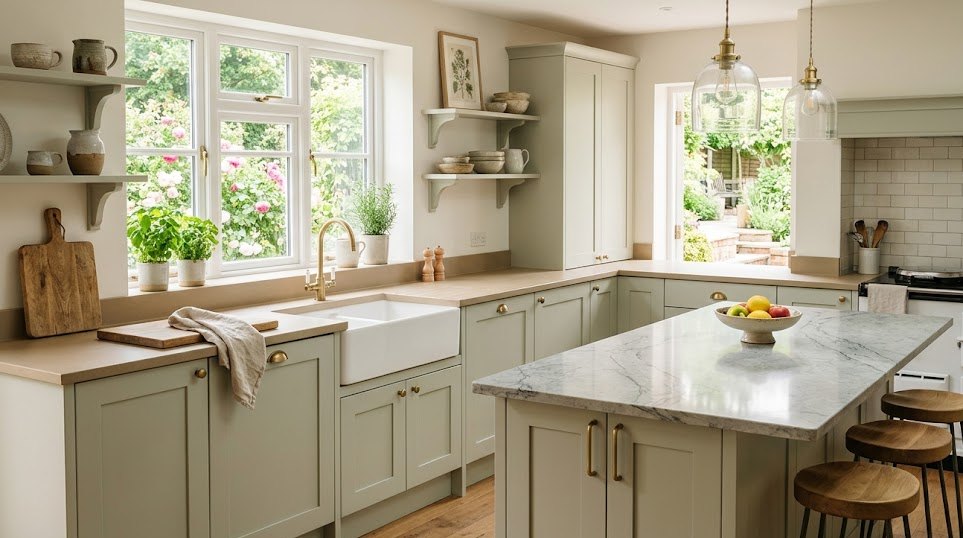
If you are choosing between a seamless run and a mitred island, the notes below are the checks we use on site. This note is written for Kitchen Worktops Direct readers who want a practical view of colour, thickness and fitting before they lock a specification.
If you are weighing up Maia vs quartz, the quick answer is this: Maia suits you if you want a solid surface worktop in standard lengths that can be cut and joined on site, with discreet joints and the option to sand out marks later. Quartz suits you if you want the hard, cool feel of stone and the strongest resistance to everyday scratches, and you are happy for the worktops to be templated and made in a workshop. Both look smart, both are wipe-clean, and neither needs sealing.
Below we compare the two point by point, so you can decide which fits the way you cook, clean and plan your kitchen.
What is Maia?
Maia is a solid surface worktop with stone and marble-inspired colours. Unlike most made-to-measure solid surfaces, it comes in standard lengths: 1800mm and 3600mm worktops in 600mm or 650mm depths, plus a 3600 x 900mm breakfast bar. It is available in 28mm and 42mm thicknesses, with jointing kits for corners and edging strips for exposed ends.
Because Maia is supplied in set sizes, it is cut to fit on site rather than templated and fabricated in a workshop. That makes it a practical option if you already have a fitter booked, and it means you can see the price of each length on our Maia worktops page before you ask for a quote.
What is quartz?
Here are the kitchen worktop ranges we currently supply:
Quartz worktops, often called engineered stone, are made mostly from crushed natural quartz bound with resins and pigments. They are cut from large slabs to fit your kitchen. The usual process is that a fabricator templates the kitchen once the base units are fitted, cuts and polishes the pieces in a workshop, then returns to install them.
Quartz is available in plain colours, speckled designs and marble-style veining, and it has the slight depth and sparkle that many people associate with natural stone.
Maia vs quartz: side-by-side comparison
Appearance and feel
Quartz looks and feels like stone: cool to the touch, with a crisp, dense finish. Maia generally has a smoother, more uniform look and feels warmer under your hand. Its stone and marble-inspired colours run from Vanilla, Latte and Cappuccino through to Lava, Vulcano, Greystone and Galaxy. If you want your kitchen to read as stone, quartz has the edge. If you prefer a calm, continuous surface, Maia is a strong choice.
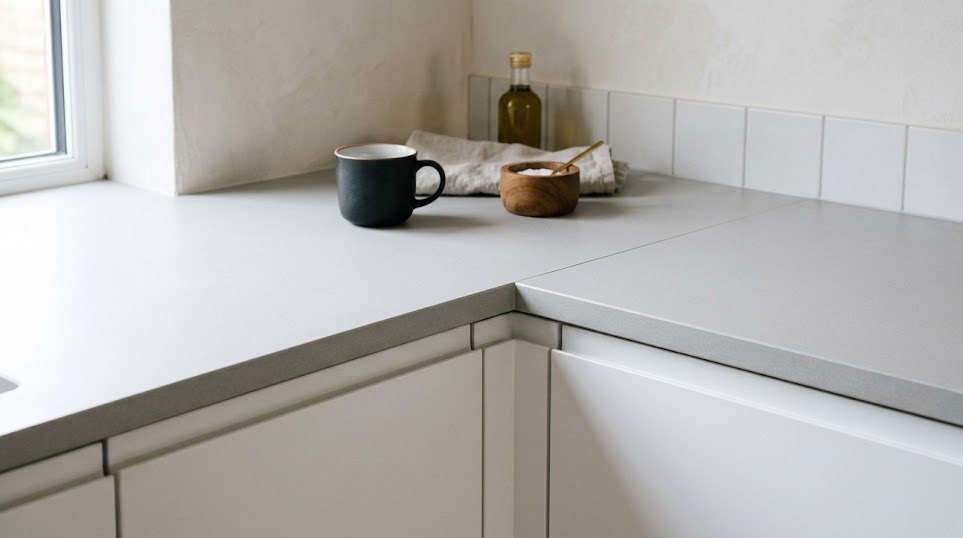
Joints
Maia lengths are joined using a jointing kit with a two-part adhesive, so corners and runs can be bonded neatly and made discreet. Quartz joints are filled and colour-matched by the fabricator; they are tidy when done well but usually remain visible as a fine line. In an L-shaped or U-shaped kitchen, that difference is worth considering.
Scratches and everyday wear
Quartz is harder and more resistant to everyday scratches. Maia, like other solid surfaces, can pick up fine marks more readily, especially on darker colours. The upside is that Maia is the same material all the way through, so light scratches can usually be sanded and buffed out. A chip in quartz is less likely, but harder to disguise if it happens.
Heat
Neither material should have hot pans placed directly on it. Both contain resins that can be marked by direct, intense heat. Use trivets or pan stands, and let cookware cool before setting it down. When Maia is cut for a hob, heat-reflective tape is applied to the cut-out during fitting, which is one reason correct installation matters.
Cleaning and hygiene
Both are wipe-clean surfaces that do not need sealing. Day-to-day, warm soapy water and a soft cloth are enough for either. Avoid harsh chemicals and always check the manufacturer’s care guidance for the product you choose.
Buying and fitting: where the two really differ
The biggest practical difference between Maia and quartz is how they get into your kitchen.
- Maia is bought in standard lengths and cut on site with a router and jig. Sink and hob cut-outs are routed in the kitchen, joints are bonded with the jointing kit, and ends are finished with edging strips. You can choose supply only for your own fitter, or ask our team to measure, cut and install.
- Quartz is templated after the units are fitted, fabricated off site and then installed. That usually means at least two visits and a gap between them while the worktops are made.
If you are refreshing a kitchen and want to plan around a fitter’s diary, Maia’s standard sizes can make life simpler. If your design has awkward angles, very long runs or a large island, quartz cut from slabs may give you more freedom on sizes.
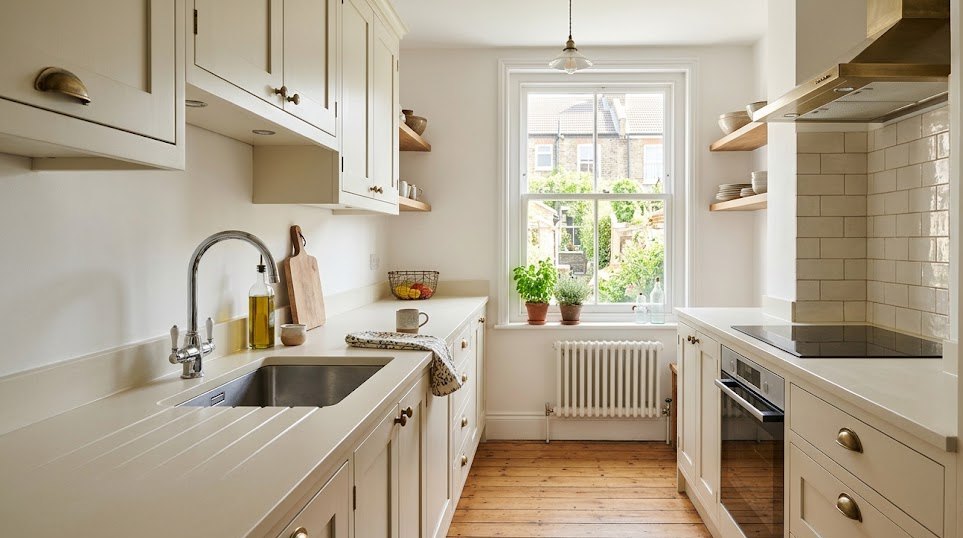
Repairs and long-term care
Maia’s long-term advantage is that everyday marks need not be permanent. Light scratches can usually be removed by the homeowner following the manufacturer’s guidance, and deeper damage can often be repaired by a specialist. We also offer a repair and repolish service for solid surface worktops if your Maia needs a refresh.
Quartz rarely needs attention, but if a chip does happen it needs a specialist resin repair, and the result can be more noticeable than a solid surface repair.
Which should you choose?
Maia may suit you better if:
- You want a solid surface look with discreet, bonded joints
- You prefer standard sizes that can be cut and fitted on site
- You want to see clear prices for each length before getting a quote
- You like knowing that light scratches can be sanded out over the years
Quartz may suit you better if:
- You want the look and cool feel of stone
- Your kitchen sees heavy use and scratch resistance is your top priority
- Your layout needs sizes beyond standard lengths
- You are happy to wait for templating and workshop fabrication
Whichever way you lean, look at both in your own kitchen before deciding. Colours change a lot between daylight and evening light, and against different cabinet doors.
Compare Maia for yourself
The best way to choose between Maia and quartz is to see them side by side at home. Order free samples of the Maia colours you like, then request a quote with your measurements. Our team will price supply only or supply and fit, so you can compare options with confidence.